


Winter yoga: five gentle practices for self-care and learning French

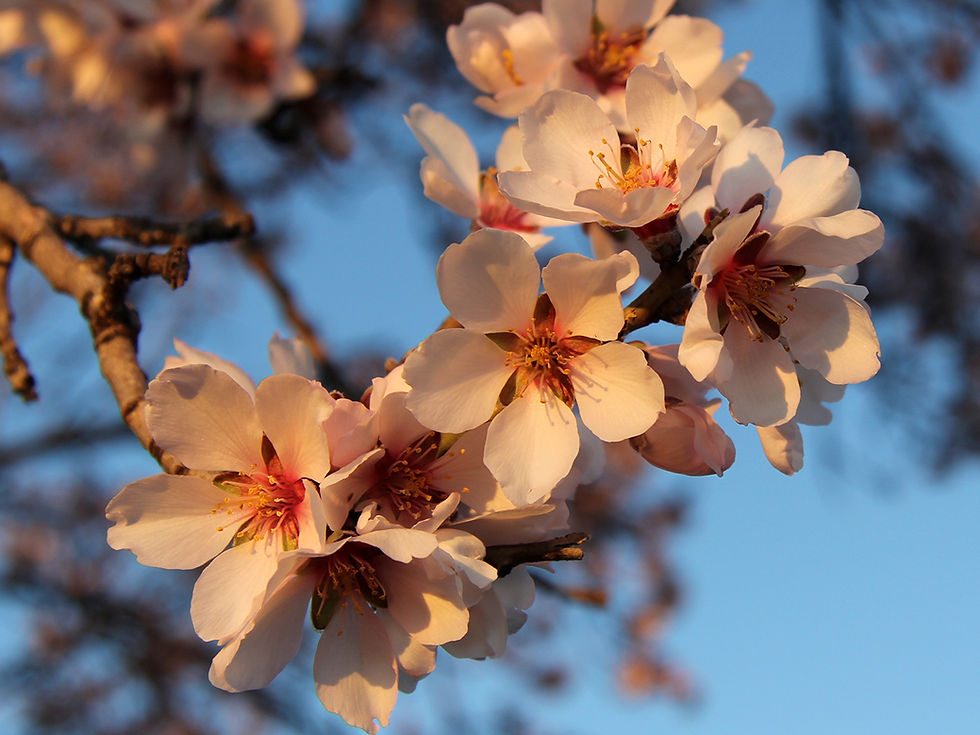
Winter in Provence has something special about it. The sun can be shining brightly, even when temperatures are low. On some mornings, the mistral wind blows so strongly that all you want to do is stay somewhere warm.
On other days, you can enjoy the beautiful light and go for a walk in nature.
I really love this season. It's a time of year when I feel a greater need to slow down, take care of my body and enjoy a few quiet moments.
Yoga is part of my daily life. I'm a certified yoga teacher, but I'm also a French teacher for international students and a somatic therapist. And in the end, these three activities often come together: they invite us to listen, observe, feel and get to know ourselves better.
Today, I'd like to share five yoga practices to explore during winter. Some help you gently move your body, while others invite you to focus on your breathing or simply rest.
And since we're also here to learn French, I'll introduce you to vocabulary related to the body, movement and breathing throughout this short practice.
Starting your winter yoga session with breathing
When I begin a yoga session, I like to take a few moments to reconnect with my breathing.
We breathe all day long without really thinking about it. Yet paying attention to our breath allows us to pause for a moment and notice how we're feeling.
In winter, when our days are busy or our bodies feel a little more tired, this moment of stillness can be particularly pleasant.
Nadi Shodhana: alternate nostril breathing

Nadi Shodhana is a breathing technique from the yoga tradition, also known as alternate nostril breathing.
It involves breathing through one nostril and then the other, using your fingers to gently close each nostril in turn.
This practice requires a little concentration. And that's exactly what I like about it: for a few minutes, your attention is focused on something very simple, the movement of air.
How to practice
Sit comfortably, keeping your back straight without becoming rigid. Relax your shoulders and take a few natural breaths.
With your right hand, gently place your thumb near your right nostril and your ring finger near your left nostril.
Close your right nostril with your thumb and slowly inhale through your left nostril. Then close your left nostril, release the right one and exhale gently.
Inhale through your right nostril, then switch sides to exhale through your left.
You've just completed one cycle of alternate nostril breathing.
Continue for a few cycles, without forcing or holding your breath. If this breathing technique doesn't feel comfortable, simply return to your natural breathing.
In the yoga tradition, this breathing technique is associated with finding balance and calm. It can also be a pleasant moment of concentration before beginning the postures.
And to learn some French, here are a few useful words: une narine (a nostril), le pouce (the thumb), l'annulaire (the ring finger), inspirer (to inhale), expirer (to exhale), fermer (to close) and relâcher (to release).
Gently moving and stretching your body
After this first moment dedicated to breathing, I'd like to invite you to bring a little movement back into your body.
In winter, we sometimes spend more time indoors, and we may feel the need to stretch, especially after sitting for a long time.
The goal isn't to become more flexible at all costs. It's simply about rediscovering pleasant sensations and respecting what our bodies need.
Bhujangasana: cobra pose to open the chest
Cobra is a pose I like to suggest when we want to gently bring some mobility back into the upper body.
It helps open the chest and move the spine into extension.
Lie on your stomach, with your legs stretched out behind you. Place your hands near your chest, keeping your elbows relatively close to your body.
As you inhale, gently lift your head and chest, mainly using your back muscles. Your hands can remain lightly supported on the mat.
Keep your shoulders away from your ears and your pelvis on the floor. There's no need to lift very high.
As you exhale, slowly lower yourself back down.
You can repeat this movement a few times, without trying to go beyond your natural range of motion.
I like this pose because it invites us to create more space in the upper body and become aware of our breathing.
It's also a good opportunity to learn a few French expressions: s'allonger sur le ventre (to lie on your stomach), soulever la poitrine (to lift the chest), plier les coudes (to bend the elbows), ouvrir les épaules (to open the shoulders) and redescendre doucement (to lower yourself gently).
Marjaryasana: cat pose

This is a pose I particularly enjoy when I want to gently get my back moving again.
Cat pose is easy to understand and can be adapted to different levels.
Come onto your hands and knees, with your hands beneath your shoulders and your knees beneath your hips.
As you inhale, gently let your belly move down and open your chest, without exaggerating the arch in your back.
As you exhale, gradually round your back and allow your head to follow the movement.
Alternate between these two positions several times, slowly.
You can coordinate your movements with your breathing, without trying to move quickly.
This movement helps mobilize the spine and become aware of the different parts of your back.
It's also a particularly useful pose for learning French verbs: arrondir (to round), creuser (to arch), lever (to raise), baisser (to lower), inspirer (to inhale) and expirer (to exhale).
Try saying the instructions out loud while you practice. You'll see that words become much easier to understand when they're associated with a movement.
Finding stability with a balancing pose
Vriksasana: tree pose

I already talked about this pose in my article about autumn yoga.
If I'm including it again here, it's because it's also one of the poses I enjoy practicing regularly, whatever the season.
Standing on one leg while staying focused isn't always as easy as it looks!
With time and practice, we learn to become more aware of how we support ourselves.
Stand upright, with both feet firmly on the floor. Gently shift your weight onto one leg, then place your other foot against your ankle, calf or inner thigh, but never directly against your knee.
You can keep your hands together in front of your chest or raise your arms above your head.
Focus your gaze on a point in front of you and breathe naturally.
If you lose your balance, simply place your foot back on the floor. You can also practice near a wall for support.
I like this pose because it reminds us that stability doesn't mean being completely still.
The body moves slightly, searches for balance and constantly adapts.
And perhaps it's also a lovely image of learning French: we hesitate, make mistakes, try again and gradually become more confident.
Ending your session with a moment of rest
Savasana: the final relaxation pose

Savasana is traditionally called corpse pose. The name may sound surprising, but it simply refers to a resting position while lying down.
It's a pose I often suggest at the end of a session.
It seems very easy because all you have to do is lie down. Yet spending a few minutes doing absolutely nothing isn't always as simple as we imagine.
Lie on your back on your yoga mat.
Let your legs rest slightly apart and allow your feet to fall naturally to the sides. Place your arms alongside your body, with your palms facing the ceiling.
Close your eyes if that feels comfortable.
Allow your breathing to return to its natural rhythm.
You can also place a cushion beneath your knees or cover yourself with a blanket, which can be particularly pleasant in winter.
For a few minutes, there's no movement to perform. You can simply observe the sensations in your body and let your thoughts come and go.
There's no need to empty your mind.
For me, this is also part of learning to relax: accepting that, for a few moments, there's nothing you need to achieve.
Learning French through yoga instructions
One of the things I love about yoga is that it allows us to discover French in a very practical way.
When I give an instruction during a class, the words are immediately connected to a movement.
If I say « Levez les bras », you can understand the expression by watching the movement. If I ask you « Arrondissez le dos », you connect the words with a physical sensation.
Little by little, the vocabulary becomes more familiar.
It's also a great way to practice the imperative, which we use very often in French to give instructions.
For example:
Inspirez profondément. — Breathe in deeply.
Expirez lentement. — Breathe out slowly.
Levez les bras. — Raise your arms.
Pliez les genoux. — Bend your knees.
Relâchez les épaules. — Relax your shoulders.
Arrondissez le dos. — Round your back.
Fermez les yeux. — Close your eyes.
Revenez doucement à la position de départ. — Gently return to the starting position.
You can even turn your next yoga session into a little French exercise: choose a few instructions and try using them during your practice.
There's no need to remember everything straight away. What's important is to come across these words regularly in a context that feels meaningful to you.
French vocabulary for yoga and breathing
Here are the main words and expressions used in this article, with their English translations.
French | English |
une respiration | a breath / breathing |
le souffle | the breath |
une narine | a nostril |
le pouce | the thumb |
l'annulaire | the ring finger |
inspirer | to inhale |
expirer | to exhale |
retenir son souffle | to hold one's breath |
une posture | a yoga pose |
un tapis de yoga | a yoga mat |
les épaules | the shoulders |
les jambes | the legs |
les genoux | the knees |
les hanches | the hips |
le buste | the torso |
la poitrine | the chest |
les coudes | the elbows |
soulever | to lift |
s'étirer | to stretch |
se mettre à quatre pattes | to get on all fours |
arrondir le dos | to round the back |
creuser le dos | to arch the back |
la colonne vertébrale | the spine |
garder l'équilibre | to keep one's balance |
prendre appui | to find support |
se détendre | to relax |
s'allonger | to lie down |
la paume de la main | the palm of the hand |
fermer les yeux | to close one's eyes |
relâcher | to release / to relax |
What if you practiced yoga during your French immersion in Provence?
When you come to learn French with me in Rousset, near Aix-en-Provence, French lessons are an important part of your stay.
But immersion doesn't stop when we close our books.
We continue speaking French during meals, excursions, walks and the activities we share.
And if yoga is one of your interests, we can also consider practicing together.
It's a different way of learning: for a little while, you don't need to search for words to build a conversation. You listen, observe and connect French instructions with movements.
It can also be an opportunity to take some time for yourself during your stay.
I love the idea that a language immersion can be adapted to what you truly enjoy. Some students are passionate about art, others about food, hiking or nature.
French then becomes a language you use to enjoy your passions, rather than simply a subject you study.
Virginie's advice
In winter, I recommend not trying to practice exactly as you would in summer.
Take a few minutes to warm up and choose movements that suit your energy levels that day.
If you're tired, a short session with a few breaths, some gentle movements and relaxation can be more than enough.
And above all, remember: yoga isn't a competition. You don't need to be flexible or master every pose to enjoy your practice.
Frequently asked questions about winter yoga
Which yoga poses should I practice in winter?
You can choose gentle movements such as cat pose, chest-opening poses such as cobra, and resting poses such as Savasana. Balancing poses, such as tree pose, can also be included. Your choice mainly depends on your physical condition, energy levels and personal preferences.
Should I adapt my yoga practice when it's cold?
It can be pleasant to begin with a few gradual movements to warm up your body. Avoid forcing stretches when you feel stiff, and keep a blanket nearby for relaxation.
Is alternate nostril breathing suitable for beginners?
A simple, slow version without holding your breath can be accessible to beginners. The important thing is to remain comfortable with your breathing and return to your natural breath whenever you feel the need.
How long should a winter yoga session last?
There's no required duration. Even 10 to 15 minutes can be enough to gently move your body and enjoy a moment of rest. You can also practice for longer, depending on your experience and available time.
Can you learn French while practicing yoga?
Yes. Yoga is an interesting way to discover vocabulary related to the body, movement verbs and instructions using the imperative. Physical gestures help you understand words in context and can make them easier to remember.
Can yoga be included in a French immersion stay in Provence?
Yes. Virginie in Provence stays are personalized according to your needs and interests. If you enjoy yoga, we can consider including a practice in your program.
Taking care of yourself in winter while continuing to learn
Winter is a season I particularly enjoy in Provence. I love its bright days, quieter landscapes and the opportunity to explore the region at a different pace.
Yoga naturally fits into these moments. It allows us to move, breathe and sometimes simply stop for a few minutes.
And if you're learning French, why not use your next yoga session to discover a few more words?
After all, learning a language is also about finding more opportunities to use it in everyday life.
If you'd like to discover this way of learning, I'd be delighted to welcome you for a French immersion stay in Provence, near Aix-en-Provence.
We'll create your stay around your level, your interests and the things you love discovering.


Comments