


The Vendée Globe: discover a legendary French race while learning French
When I talk about French culture with my students, I naturally think about food, traditions, villages, history and the French way of life. But French culture is also about sport and the major events that millions of French people love to follow.
The Vendée Globe is one of them.
This round-the-world sailing race is particularly well known in France. And in our family, it has a special meaning: my husband Alex grew up in the Vendée, the department where Les Sables-d’Olonne, the starting and finishing point of the race, is located.
So today, I’m taking you far away from Provence — and even far away from France! Let’s head out to sea to discover the Vendée Globe, its history, its rules and some useful French sailing vocabulary.
What is the Vendée Globe?
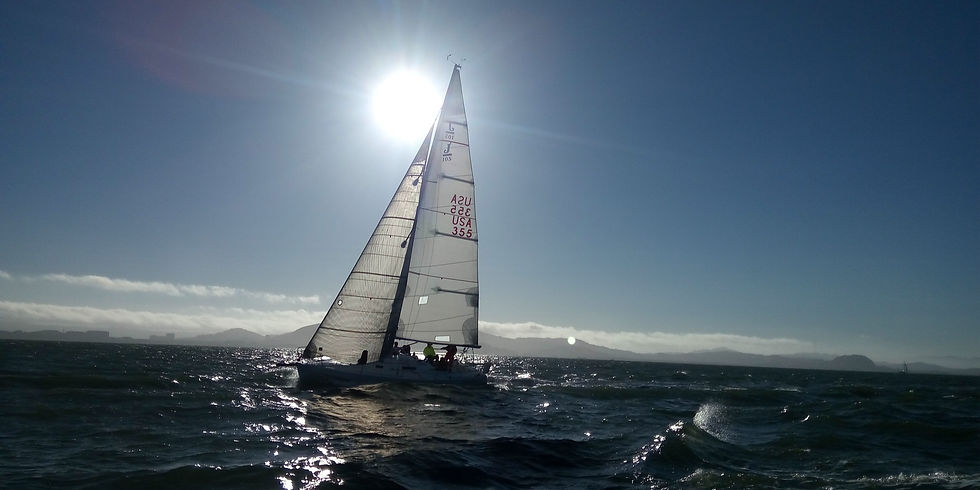
Imagine setting off alone on a sailboat.
Ahead of you lie tens of thousands of kilometres around the world. You will cross the Atlantic, sail past the Cape of Good Hope, Cape Leeuwin and Cape Horn before heading back towards France.
And throughout the entire journey, you cannot stop in a port.
That is the principle of the Vendée Globe: a round-the-world race sailed solo, non-stop and without assistance. The race starts and finishes in Les Sables-d’Olonne, on France’s Atlantic coast.
These three expressions are important.
Solo means that each sailor is alone on their boat.
Non-stop means that they cannot stop in a port during the race.
Without assistance means that they must deal with any problems on board themselves, while respecting the rules of the race.
Once you understand that, it becomes easier to see why the Vendée Globe is so fascinating.
A French race born in 1989
The first Vendée Globe set off from Les Sables-d’Olonne in 1989.
Since then, the race has taken place every four years.
Over the years, the boats have become faster and technology has evolved considerably. But the idea remains the same: one sailor, one boat and one journey around the world.
Only one sailor has managed to win the Vendée Globe twice: Michel Desjoyeaux, in 2001 and again in 2009.
Why is the Vendée Globe called the “Everest of the Seas”?

The expression “Everest of the Seas” immediately gives you an idea of just how challenging this adventure is.
The sailors spend several weeks alone at sea. They have to manage their boat, their sleep, their food, the weather and any repairs that may be necessary. They also cross some of the most difficult waters on the planet.
But numbers only tell part of the story.
What fascinates me most is imagining daily life on board. Sleeping for short periods. Watching the weather. Manoeuvring the boat. Making repairs. Taking decisions alone. And doing it all again, day after day, for weeks.
At that level, the Vendée Globe is no longer simply a sporting competition. It is also a human adventure.
Stories that show just how far sailors can go
Some of the stories from the Vendée Globe are quite incredible.
During the 1992-1993 edition, French sailor Bertrand de Broc seriously injured his tongue. With remote guidance from a doctor, he had to stitch it himself before continuing the race.
Another remarkable story is that of Australian sailor Nick Moloney. During the 2004-2005 Vendée Globe, damage to his boat forced him to abandon the race off the coast of Brazil. A few months later, once the boat had been repaired, he returned to collect it and set sail again to complete his journey around the world.
Of course, he was no longer competing.
He simply wanted to finish his adventure.
I love this story because it reminds us that behind the rankings and records, the Vendée Globe is also about determination.
The 2024-2025 Vendée Globe: a historic edition
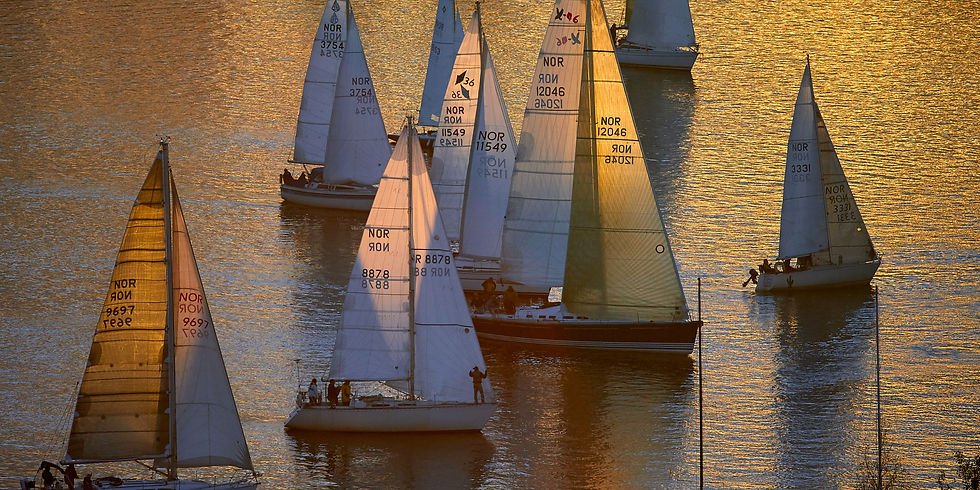
Forty sailors left Les Sables-d’Olonne on November 10, 2024, a record number in the history of the race. Thirty-two of them completed the Vendée Globe, representing 80% of the participants and the lowest retirement rate ever recorded in the race.
The winner, French sailor Charlie Dalin, crossed the finish line on January 14, 2025.
It took him exactly 64 days, 19 hours, 22 minutes and 49 seconds to sail around the world.
In doing so, he beat the previous record, set by Armel Le Cléac’h during the 2016-2017 edition, by more than nine days.
The edition was also marked by the performance of Swiss sailor Justine Mettraux, who set a new women’s record of 76 days, 1 hour, 36 minutes and 52 seconds. Chinese sailor Jingkun Xu also became the first Chinese sailor to complete the Vendée Globe.
Why is the Vendée Globe so popular in France?
The Vendée Globe is a sporting competition, but it has also become a major popular event in France.
During the 2024-2025 edition, 2.45 million people visited Les Sables-d’Olonne during the Vendée Globe period. The start of the race is particularly impressive.
The boats leave the harbour one after another before heading out to sea. On land, crowds gather to watch and cheer on the sailors before they begin their journey around the world.
And when the sailors return several weeks later, the crowds are there to welcome them home.
Even if you know very little about sailing, it is easy to become caught up in the story: following the position of the boats, understanding the weather, discovering the problems sailors encounter on board and waiting for them to reach the finish line.
That is probably one of the reasons why the race has become so popular in France.
Why is the race called the Vendée Globe?

The answer is actually quite simple.
The Vendée is a French department located on the Atlantic coast. Les Sables-d’Olonne, where the race starts and finishes, is in the Vendée.
And the word “Globe” naturally refers to the sailors’ journey around the world.
The Vendée is quite far from Provence, but it is part of my family’s story because it is where my husband Alex grew up.
This is also something I love about the conversations we have during a French immersion. We might start by talking about Provence and, a few minutes later, find ourselves discussing another part of France, a sporting event or a family memory.
Because learning a language is also about all of this.
Learn French with the Vendée Globe
You don’t need to know anything about sailing to use the Vendée Globe as a way to learn French.
In fact, it is a wonderful opportunity to discover new vocabulary in context.
Un marin / une navigatrice: a sailor.
Un skipper: the person in charge of a sailing boat.
Un voilier: a sailboat.
Prendre le départ: to start a race.
Franchir la ligne d’arrivée: to cross the finish line.
Faire escale: to stop at a port during a journey.
Une avarie: damage or a technical problem on a boat.
Abandonner: to withdraw from a competition before finishing.
Le cap: the direction in which a boat is travelling.
The word can also refer to a cape, a piece of land extending into the sea.
Le large: the open sea, away from the coast.
And here is one expression you can use even if you never set foot on a boat:
“Garder le cap”
Literally, it means to stay on course.
Figuratively, we use it when someone continues moving towards their goal despite difficulties.
And ultimately, this expression suits the Vendée Globe rather well.
French culture isn’t only learned from books
During my French immersion stays in Provence, we talk over meals, during excursions, at the market, in the car or about an event that everyone in France is talking about.
One day, a conversation might begin with a Provençal speciality. Another day, with an expression you heard at the market. And why not with a boat somewhere in the Southern Ocean?
This is the way I love to teach.
French becomes a language you use to understand the people, traditions, regions and stories that are part of everyday life in France.
And sometimes, just a few new words are enough to open up a whole new world.
FAQ about the Vendée Globe
What is the Vendée Globe?
The Vendée Globe is a solo, non-stop, unassisted sailing race around the world. It starts and finishes in Les Sables-d’Olonne, in the Vendée.
How often does the Vendée Globe take place?
The Vendée Globe takes place every four years. The tenth edition started in November 2024.
Who won the most recent Vendée Globe?
Charlie Dalin won the 2024-2025 edition in 64 days, 19 hours, 22 minutes and 49 seconds, setting a new race record.
How many sailors took part in the 2024-2025 Vendée Globe?
Forty sailors started the race and thirty-two completed it.
Why is the Vendée Globe called the “Everest of the Seas”?
The expression highlights the extreme difficulty of the race. The sailors travel around the world alone, non-stop and without assistance, spending several weeks at sea.
Learn French through everyday French life
Discovering the Vendée Globe, learning what une avarie means, understanding the expression garder le cap or talking about a part of France you didn’t know before: all of this can be part of learning a language.
This is how I love to teach French during my immersion stays in Provence: through lessons, of course, but also through conversations, encounters, excursions and everything that everyday life inspires us to discover.
Would you like to learn French this way? Discover my French immersion stays with Virginie in Provence.


Comments