


Discovering olives and olive oil during my French immersion in Provence
Updated: 4 days ago

Hi, my name is Emily and I’m from Canada.
When I came to spend a week on a French immersion in Provence with Virginie, of course I wanted to improve my French. But I also wanted to discover the region in a different way, through its food, what people grow here and the traditions that are part of everyday life.
And there was one thing I was particularly interested in: olives.
I love olives. So when I mentioned this to Virginie, our conversation gradually turned into an opportunity to learn about olive trees, their life cycle and how olive oil is made in Provence.
That’s also something I loved about my immersion: a simple curiosity could become the starting point for a new discovery… and another opportunity to speak French.
Walking among the olive trees in Provence

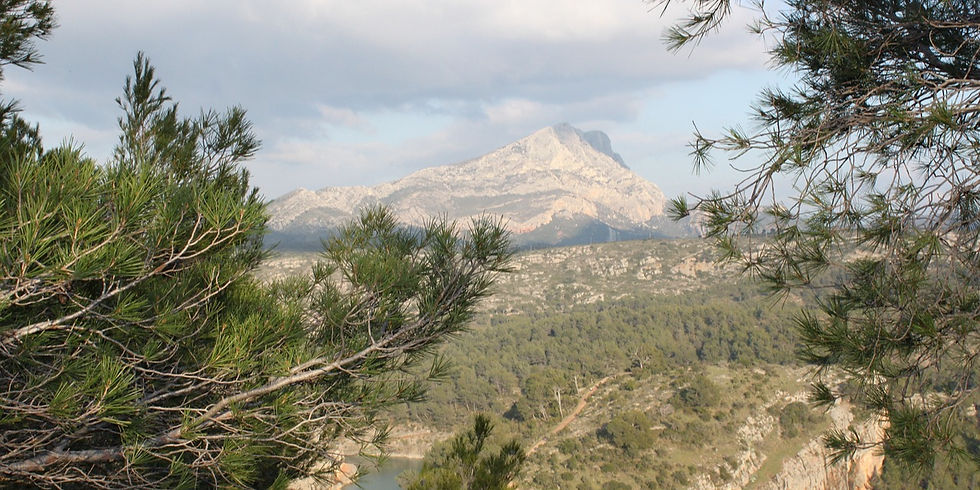
After lunch, I felt like going for a walk. Virginie knew how much I loved olives, so she suggested heading towards the Sainte-Victoire mountain, where olive trees are a natural part of the landscape.
We walked among the trees with Sainte-Victoire in the background. Very quickly, my curiosity about olives became the theme of our walk.
We were outside, surrounded by trees, and we could naturally continue the conversations we had started during our lessons. Except this time, the words were right in front of me: un olivier, une branche, une feuille, une olive, un verger…
This is a way of learning that I particularly enjoyed during my stay. Vocabulary was no longer simply something I learned during a lesson. I could connect the words with what I was actually seeing around me.
Understanding the life cycle of an olive through the seasons
As we walked, Virginie explained how much the olive tree changes throughout the year.
In spring, tiny white flowers appear. Then come the olives, which gradually develop over the following months.
Of course, I had seen green and black olives on my plate many times before. But I had never really thought about what happened before they reached the table.
That’s what I love about this kind of discovery: something very familiar suddenly becomes much more interesting when you understand where it comes from.
We looked at the fruit on the trees and talked about how olives ripen. As an olive matures, its color gradually changes.
And, naturally, our walk also gave us plenty of new French words to use.
The olive harvest in Provence

Olives are generally harvested in the fall.
Virginie explained some of the methods used to collect the olives without damaging the fruit or the trees too much. Some methods are traditional, while others now use tools that make the work easier.
Obviously, I hadn’t come to Provence to take a course in olive growing!
But I enjoyed understanding a little more about all the work behind a product that I had always consumed without really thinking about it.
It is also a way of understanding Provence. Behind the markets, bottles of olive oil and aperitifs are crops, seasons and traditional know-how.
From olives to olive oil

Once the olives have been harvested, another stage begins: turning them into oil.
During the day, we talked about how olive oil is made and about cold extraction. Then came the moment I was probably looking forward to the most: the tasting.
Tasting several olive oils one after another allows you to notice differences that you might not pick up when you simply use olive oil for cooking.
Some flavors are milder, while others are more pronounced.
And, as so often during my immersion, the tasting turned into a conversation.
How do you describe a flavor in French? Which words should you use? Do I like this oil? Why do I prefer this one?
Even around the table, you keep learning.
The olive, a little piece of Provence

During my stay, I realized that olives are about much more than what you find in a bowl at aperitif time.
Olive trees are part of the landscape. Olive oil is part of the cuisine. And everything surrounding its production also tells a story about Provençal culture.
Perhaps that was what I enjoyed most about this day.
I already knew olives.
But after this walk, I didn’t look at them in quite the same way.
Even today, when I see a bottle of olive oil or a bowl of olives on a table, I think of Provence and that day spent discovering everything that lies behind this little fruit.
Learning French through everyday life
Before my stay, I naturally thought that most of my progress in French would come from the lessons.
The lessons were important, of course. But I discovered that learning happened throughout the entire day.
During a walk. In front of an olive tree. By asking a question. By trying to describe a flavor. By discovering a word and using it again a few hours later.
That continuity is something I particularly loved about my immersion.
You learn French, but you also learn to better understand the region you are staying in.
And for me, olives are now one of those simple little memories that instantly take me back to Provence.
Vocabulary about olives and olive oil
French | English |
une olive | an olive |
un olivier | an olive tree |
un verger | an orchard |
une branche | a branch |
une feuille | a leaf |
la maturation | ripening |
la récolte | the harvest |
récolter | to harvest |
l’huile d’olive | olive oil |
l’extraction à froid | cold extraction |
une dégustation | a tasting |
une saveur | a flavor |
FAQ – Olives and olive oil in Provence
When are olives harvested in Provence?
Olives are generally harvested in the fall. The exact timing depends on several factors, including the variety of olive, its stage of ripeness and the type of oil the producer wants to make.
Do green olives and black olives come from different trees?
Not necessarily. The color of an olive depends in part on its stage of ripeness. Olives are green at first, and their color gradually changes as they mature.
Can you visit olive groves in Provence?
Yes. Some estates and olive mills offer visits or tastings. What is available varies according to the producer and the season, so it is always best to check visiting conditions directly with them.
What is the best time of year to experience the olive harvest?
Fall is the most interesting time if you would like to experience the olive harvest. However, during the rest of the year you can observe other stages in the olive tree’s life cycle, including flowering in spring and the development of the fruit over the following months.
Can you learn French through food during a French immersion?
Yes, and this was actually one of the things I loved about my stay. Meals, markets, tastings and excursions all provide opportunities to use French in real-life situations and learn vocabulary connected with everyday life.
Another way to discover Provence
This day spent discovering olives sums up quite well what I loved about my immersion.
It started with something very simple: I love olives.
And that curiosity led me to walk through the landscapes around Sainte-Victoire, discover the life cycle of the olive tree, talk about Provençal traditions, taste different olive oils and, above all, use my French in a different way.
Learning was part of everything we did. And that is probably what I remember most about the experience.
Would you also like to learn French while discovering Provence from the inside?
You may also like
Discover another side of the mountain that forms the backdrop to this story and one of my favorite landscapes around Aix-en-Provence.
Continue exploring the area around Sainte-Victoire and discover Aix through my eyes.
Discover what a French immersion day is really like and how French naturally becomes part of meals, conversations and everyday activities.


Comments