


Back to school in Provence: understanding the French school system through our family life
Updated: Sep 1

Back-to-school season has always been a special time in our family.
For a long time, it meant getting three school bags ready, seeing friends again outside primary school, and finding out the name of the new teacher. This year, something is changing.
For the first time, none of our three children is in primary school anymore. Léo is starting high school, Tom is continuing middle school, and Lily is taking her first steps into 6e, the first year of French middle school.
Three children. Three different stages of the French school system.
And that makes this a pretty good opportunity to explain how school works in France.
When I welcome international participants for a French immersion, we talk a lot about everyday life. School is often one of the subjects that raises the most questions.
Why do French classes have names like CP, CM2 or 6e? Why does middle school start with 6e and end with 3e? What is the brevet? And when do students take the famous baccalauréat?
I’ll try to explain it all simply, through our own family experience.
Back to school: a real part of French life

In France, the start of the school year almost marks the official end of summer.
During the long summer holiday, the rhythm changes completely. Children forget about timetables, early mornings and homework for a while. The days feel longer and family life runs differently.
Then the end of August arrives.
School supplies reappear. We check the lists. We make sure shoes, bags and clothes are ready. And the children start wondering who will be in their class.
Everyone experiences this moment differently.
Some cannot wait to see their friends again.
Others would happily extend the holidays by a few more weeks.
And when you are changing schools, as Lily is this year, back-to-school season naturally takes on a different meaning. For her, starting 6e means leaving primary school and discovering middle school. A new building, several teachers, different classrooms and more independence…
It is a real milestone.
From preschool to high school: how does the French school system work?

When I explain the French school system to my international students, I regularly see a few puzzled expressions.
I understand why.
Even the names of the school years are not always very intuitive.
In France, school begins with école maternelle, or preschool. Children spend three years there: petite section, moyenne section and grande section.
Then comes école élémentaire, or primary school.
This is where the famous CP, CE1, CE2, CM1 and CM2 begin.
Here is the progression, simply:
École maternelle (preschool)
petite section
moyenne section
grande section
École élémentaire (primary school)
CP
CE1
CE2
CM1
CM2
Then comes collège, or middle school.
And this is where the system becomes particularly amusing for many foreigners: the school years start counting backwards.
Collège (middle school)
6e
5e
4e
3e
Then comes lycée, or high school:
Lycée (high school)
seconde
première
terminale
Once you see it laid out this way, it all seems much simpler.
In our family: three children at three different stages

This year, you can almost understand the whole French school system just by looking at our family.
Léo is starting seconde. That means it is his first year of high school. Tom is in 4e and continuing his life as a middle-school student. And Lily is starting 6e. This is probably the biggest change of the year for her.
Only a few months ago, she was one of the oldest children in primary school. Now she is one of the youngest in her new school. That is one of the strange things about moving from one stage of school to another.
You leave a place you know perfectly, your routines and sometimes a teacher you saw every day… and you almost start again from zero. I always find it interesting to watch how each of my children goes through these transitions.
They are growing up in the same family and within the same school system, yet they experience change in completely different ways. That is also what back-to-school season is about: it is not just a date on the calendar.
It is a small transition.
Starting 6e: a major change in France
To understand why Lily starting middle school matters so much, you need to picture the difference between a French primary school and a collège. In primary school, children usually have one main teacher who is with them for most of the week. In middle school, everything changes.
One teacher for French.
Another for mathematics.
Another for history and geography.
Then science, foreign languages, physical education…
Students move from classroom to classroom, learn to manage their schedule and gradually become more independent. This all feels completely normal when you grow up in France.
But when I talk about it with people from other countries, I often realise that many things we consider obvious are actually very cultural.
And that is exactly what I enjoy about conversations during an immersion.
We may start by talking about one of my children going back to school and, twenty minutes later, find ourselves comparing the French, American, Canadian or Australian education systems.
French then becomes a way to understand each other’s daily lives.
The brevet and the baccalauréat: two very French words

Two exams often come up when we talk about school in France.
The first is le brevet.
It is taken at the end of 3e, the final year of middle school.
The second is much better known abroad: le baccalauréat, usually shortened to le bac.
It marks the end of high school and remains a real symbol of French school life.
Even people who left school years ago often remember their bac, the revision period, or the moment they discovered their results.
And when a child starts high school, as Léo is doing this year, that exam which once seemed very far away suddenly begins to feel a little closer.
I think that is also why this back-to-school season feels different to me.
We really have entered a new stage.
What back-to-school season also tells us about French culture
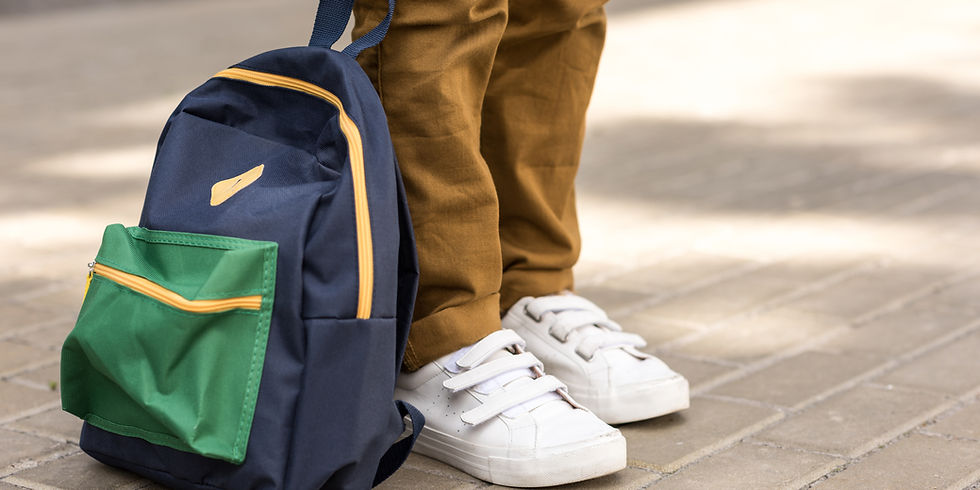
Talking about school reveals a lot about a country.
Its organisation, of course.
But also its vocabulary, habits and sometimes even its values.
A cartable, a cour de récréation, a carnet de correspondance, the cantine, a récréation, les devoirs, la rentrée des classes…
All these words belong to the everyday life of French families.
You hear them in conversations, on the news, in films and when friends talk to one another.
Understanding the French school system therefore also helps you understand France itself.
And when you are learning a language, it is often these small parts of everyday life that help you move to the next level.
You no longer understand only the words.
You understand what they represent.
Virginie’s tip
If you are learning French, take an interest in very everyday topics such as school, meals, holidays or family routines.
They are excellent ways to discover French culture.
And most importantly, this vocabulary comes up constantly in real conversations.
Learning French also means stepping into everyday life
During an immersion at my home, French lessons are only one part of the experience.
Life continues around us.
My children come home from school.
We talk about their day.
Sometimes we have to organise a timetable, prepare something for the next morning, or listen to the story of a day that did not go exactly as planned.
And my students discover that reality too.
It is often in these very simple moments that the most interesting conversations begin.
Someone asks me what 6e means.
We compare school systems.
Another word comes up.
Then an expression.
And almost without noticing it, we are learning French.
That is exactly what I love about immersion.
The language does not stay inside a notebook.
It follows real life.
A new school year for them… and a little for us too
I think this school year will remain a special one for our family.
No children left in primary school.
One child in high school.
Two in middle school.
When children are small, people often tell you: “Enjoy it, it goes so quickly.”
At the time, you do not always understand what they mean.
Then one day, your youngest child leaves primary school and you genuinely wonder how all those years could have passed so fast. There are still plenty of stages ahead of us, of course.
But this one marks something.
And as every year, what I will want most is to see them again after that first day.
Because in the end, whatever their age, the question is always the same:
“So, how was your first day back?”
Back-to-school vocabulary
French | English |
la rentrée scolaire | back-to-school / the start of the school year |
l’école maternelle | preschool / nursery school |
l’école élémentaire | elementary school / primary school |
le collège | middle school |
le lycée | high school |
un professeur | a teacher |
un emploi du temps | a timetable / class schedule |
le brevet | French lower-secondary school diploma |
le baccalauréat / le bac | French high-school leaving exam |
un cartable | a school bag |
la cour de récréation | the school playground |
la cantine | the school cafeteria |
les devoirs | homework |
Frequently asked questions about the French school system
At what age do children start school in France?
Children generally start école maternelle at around the age of three.
What is the difference between primary school and middle school in France?
In primary school, children mainly stay with the same teacher. In middle school, they have several teachers and move between classes depending on the subject.
Why do French middle-school year groups count backwards?
French middle school begins with 6e, followed by 5e, 4e and 3e. It is simply the traditional naming system used in French education.
What is the brevet?
The brevet is the diploma taken at the end of middle school, in 3e.
What is the baccalauréat?
The baccalauréat, usually called the bac, is the exam that marks the end of high school and gives access, among other things, to higher education.
Is the school system different in Provence?
No. The main stages of the French school system are national. Experiencing back-to-school season in Provence, however, shows how these national rules fit into the everyday life of a family in the south of France.
Living French beyond the classroom
For me, learning French also means understanding the everyday life, habits and culture of the people who speak it.
A French immersion in Provence allows you to experience these conversations from the inside: over a meal, during an excursion, at the market… or simply when one of the children comes home from middle school and talks about the day.
It is in these ordinary moments that French truly becomes a living language.
And that is the France I love sharing with the people I welcome to Provence.


Comments