


My first day in Cassis during my language immersion in Provence
Updated: Aug 2
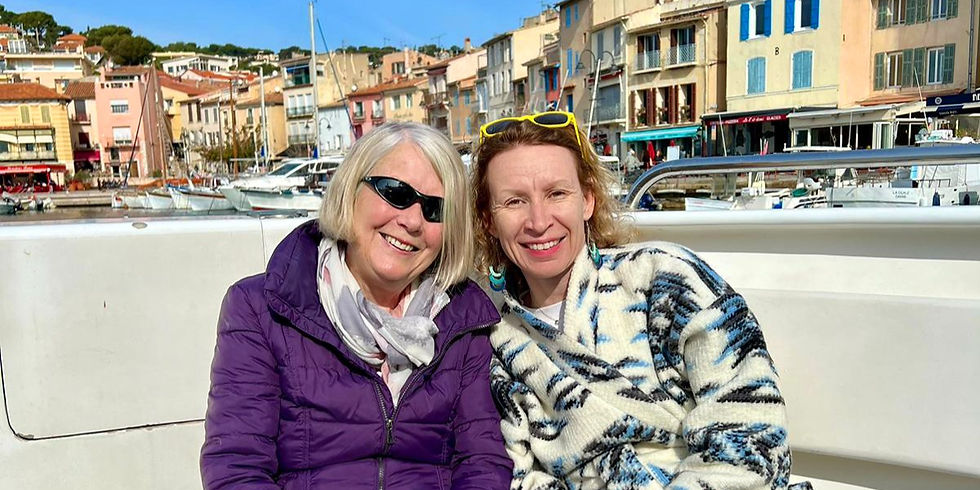
After reading this article, you will know:
why Cassis is one of Virginie’s favourite excursions;
what makes the Calanques so exceptional;
why this day is ideal for practising French naturally;
what you truly experience during a French immersion programme in Provence.
Hello!
My name is Julia, and I come from England.
When I arrived in Provence to learn French with Virginie, I already knew that this week would be different from every other language course I had taken before.
Of course, I wanted to improve my French, but I also wanted to discover the region in a different way, at the pace of local life.
A few days after I arrived, Virginie suggested spending the day in Cassis.
I had heard the name before, but I knew almost nothing about this small village on the Mediterranean coast.
“You’ll see, I think you’re going to love it,” she simply said with a smile.
We left the house early in the morning. During the journey, the conversation naturally took place in French. We talked about the weather, the landscapes passing by outside and the villages we travelled through. Whenever I was searching for a word, Virginie helped me without ever interrupting the conversation.
I hardly even realised that I was learning.
I was simply living in French.
As we continued along the road, the Mediterranean appeared between the pine trees. White cliffs came into view in the distance, and the light was unlike anything I had ever seen in England. Even before we arrived, I understood why so many people fall in love with Provence.
Why visit Cassis during a French immersion programme in Provence?

As soon as we arrived, I was charmed by the atmosphere in Cassis.
The port was already lively. Boats gently rocked on the water, café terraces were beginning to fill up and the fishermen were finishing their morning’s work.
Everything felt peaceful.
What I particularly liked was that Cassis is still a village where people take the time to enjoy life.
We began by walking along the port. Virginie knew the area perfectly. In every street, she shared an anecdote, a French expression or a detail about life in Provence.
At one point, she asked me:
“Julia, do you know what a calanque is?”
I hesitated for a few seconds.
“Not really…”
She pointed towards the cliffs surrounding the bay.
“Look carefully. In a few minutes, you’ll understand much better than with any definition.”
I thought this way of learning was brilliant.
Instead of memorising a vocabulary list, I was discovering words directly in their natural environment.
A few minutes later, the word calanque was already part of my vocabulary.
Without any effort.
Virginie’s tip
When visiting Cassis, try to arrive in the morning. The village is quieter, the light is beautiful and you will be able to enjoy a walk around the port more easily before the boats depart.
Discovering the Calanques of Cassis by boat

Our next activity was the one I had been looking forward to the most.
Discovering the Calanques.
We boarded a small boat that would take us to Port-Miou, Port-Pin and En-Vau, three of the region’s most famous calanques.
As the boat moved forward, the scenery became increasingly spectacular.
The limestone cliffs plunged directly into water that was an almost unreal shade of blue. I had never seen such a clear sea before.
Everything around us was calm.
The only sounds were the boat, the cries of the seagulls and the wind passing between the cliffs.
During the trip, Virginie explained that the Calanques stretch between Marseille and Cassis and are now part of the Calanques National Park. They form a protected natural area with wildlife, plants and landscapes that are unique in France.
However, what I remember most is not the information itself, but the way I learned it.
We spoke French throughout the boat trip. I could ask any question that came to mind.
How do you say “cliff” in French?
What is the difference between a bay and a calanque?
Why are the rocks so white?
Every answer became another opportunity to practise.
I realised that speaking was much easier when the conversation was about something right in front of me. I was no longer trying to construct perfect sentences.
I simply wanted to communicate.
That was probably the moment when I began to feel more confident.
💬 What I learned in French that morning
une calanque — a calanque
une falaise — a cliff
un port — a port
embarquer — to board
accoster — to dock
un pêcheur — a fisherman
la Méditerranée — the Mediterranean
une crique — a cove
un panorama — a panoramic view
naviguer — to sail
A delicious break overlooking the port of Cassis
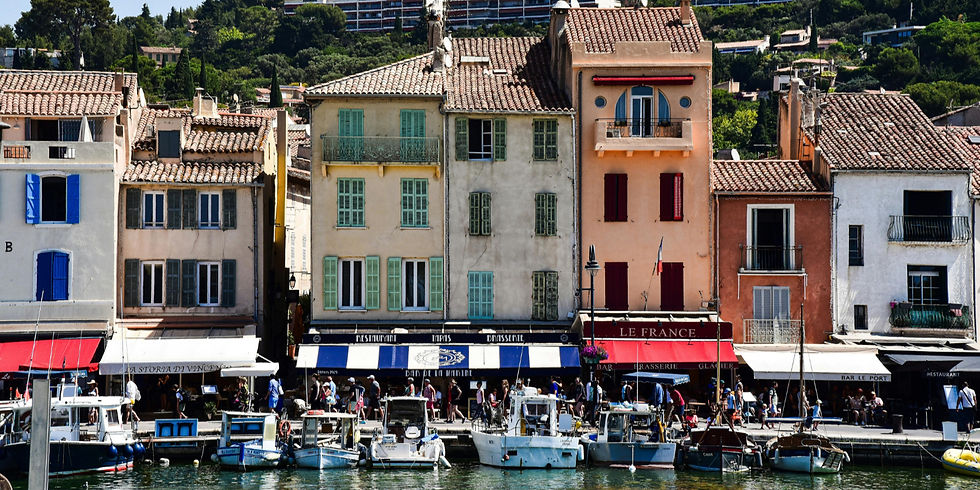
After our boat trip, we slowly made our way back towards the port.
The sun was now high in the sky and the terraces were beginning to fill up.
My mind was still full of images.
The white cliffs.
The turquoise water.
The silence of the Calanques.
As we walked, Virginie asked me:
“So, which calanque was your favourite?”
We continued talking in French for a few minutes. I still sometimes had to search for words, but I already felt much more comfortable than I had on the first day.
This was something I quickly noticed during my immersion programme.
After every excursion, the conversations became more and more natural.
We were no longer simply doing a French exercise.
We were genuinely connecting with each other.
Virginie then stopped in front of a restaurant with a lovely terrace overlooking the port.
“There is a Provençal speciality that I would like you to try today.”
I did not yet know that this lunch would become one of my favourite memories of the week.
Discovering bouillabaisse, one of Provence’s most famous dishes

When the waiter arrived with our plates, I immediately understood that bouillabaisse was not simply a fish soup. Everything was presented with great care.
The fish.
The fragrant broth.
The croutons.
The rouille sauce.
Before we started eating, Virginie explained the origins of the dish.
In the past, fishermen from Marseille used to cook the fish they were unable to sell. They simmered it with tomatoes, garlic, saffron and aromatic herbs.
Over the centuries, this recipe became one of the symbols of Provençal cuisine.
I really enjoy learning in this way.
Instead of reading a history book, I discover French culture around a table.
Traditions suddenly become much more meaningful.
Virginie’s tip
When tasting bouillabaisse for the first time, take your time.
Do not hesitate to ask the waiter how it should be eaten. It is an excellent opportunity to practise your French while discovering local traditions.
Learning French over a meal
During the meal, we talked about many different things.
The differences between France and England.
Table manners and habits.
Travel.
Our families.
And, of course… food.
I was surprised to hear myself speaking much more spontaneously.
Whenever I did not know a word, Virginie always helped me kindly.
She did not correct every single mistake.
She allowed the conversation to flow.
I think that is what helped me gain confidence.
Little by little, I thought less about grammar.
I focused more on what I wanted to say.
And without even realising it, I was making progress.
I now understand why Virginie often says that French is not only learned during lessons. It is also lived during meals, walks and all the little everyday conversations that make an immersion programme so different.
What I learned in French during lunch
une bouillabaisse — bouillabaisse
un bouillon — broth
un croûton — a crouton
la rouille — rouille sauce
un crustacé — shellfish
un pêcheur — a fisherman
mijoter — to simmer
savourer — to savour
une spécialité locale — a local speciality
What I remember from this day in Cassis

When I arrived in Provence, I thought that improving my French mainly required learning new grammar rules and memorising vocabulary. This day in Cassis showed me that there was another way to learn.
I discovered magnificent landscapes. I tasted a Provençal speciality. I learned new words.
Most importantly, I began to feel more confident. I was no longer afraid of making mistakes. I spoke more. I asked questions.
For the first time in a long time, I felt that French was becoming a living language.
A language I could genuinely use.
I now understand why Virginie speaks about immersion rather than French lessons.
During a day like this, you learn without even noticing it. French is everywhere.
In the conversations.
In the landscapes.
At the restaurant.
On the port.
In the small moments of everyday life.
This is probably the day that will remain my favourite memory of my stay in Provence.
Would you like to experience this for yourself?
When you enjoy discovering a region slowly, want to become more confident when speaking and would like to experience French in real-life situations, an immersion programme with Virginie is much more than a simple language holiday.
Every day is different.
Every excursion is adapted to your interests.
Every conversation becomes a new opportunity to improve.
Cassis is one of the many excursions Virginie loves sharing with the people she welcomes to Provence. Here, you do not simply discover a village.
You also discover a new way of learning French.
French–English vocabulary
French | English |
Une calanque | A calanque |
Une falaise | A cliff |
Le port | The harbour |
Embarquer | To board |
Accoster | To dock |
Une crique | A cove |
Un pêcheur | A fisherman |
Une bouillabaisse | Bouillabaisse |
Un bouillon | Broth |
Un croûton | A crouton |
La rouille | Rouille sauce |
Un crustacé | Shellfish |
Mijoter | To simmer |
Savourer | To savour |
Une spécialité locale | A local speciality |
Frequently asked questions
Why visit Cassis during a French immersion programme?
Cassis provides an ideal setting for practising French while discovering Provence through its natural landscapes, gastronomy and everyday conversations.
What is the best way to discover the Calanques?
A boat trip allows you to admire several calanques while learning more about their history and natural environment.
Can Cassis be visited throughout the year?
Yes. Every season has its own charm, although spring and autumn generally provide a quieter atmosphere.
Why does Virginie take her students to Cassis?
This excursion encourages natural conversations in French. The landscapes, visits and meals all become opportunities to practise the language with confidence.
What can you learn during this day?
You can learn vocabulary connected with nature, gastronomy and everyday life, while also becoming more confident communicating in French in real-life situations.


Comments